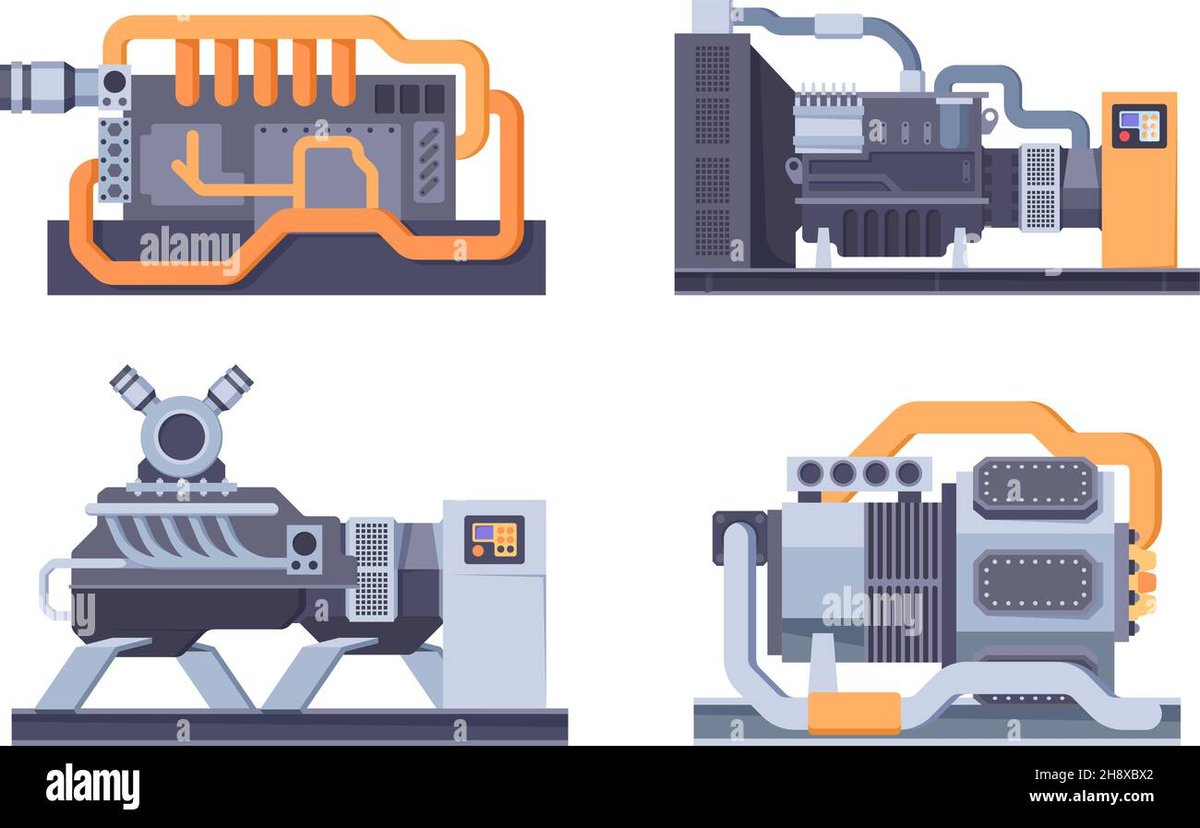
In today's interconnected world, reliable power isn't a luxury—it's the backbone of virtually every industrial operation. From keeping hospital life support running to powering complex manufacturing lines and safeguarding critical data, Industrial Generator Types & Technologies are the unsung heroes of uninterrupted business continuity. When the grid falters, these robust powerhouses step in, ensuring your critical infrastructure remains operational, productive, and profitable.
Think of an industrial generator as a meticulously engineered sentinel, always on alert, ready to provide high-capacity, three-phase power ranging from 50 kW to multiple megawatts (MW). These aren't your typical home backup units; they're heavy-duty, long-runtime machines designed for demanding environments, capable of operating as standalone units or in sophisticated paralleled banks for unmatched scalability and redundancy.
At a glance: Your Takeaways on Industrial Generators
- Core Function: Convert mechanical energy (from fuel) into stable electrical power.
- Key Components: Engine (diesel, natural gas), Alternator, and sophisticated Control Systems.
- Types Vary by: Fuel (diesel, natural gas, bi-fuel), Configuration (standby, mobile), and Duty Cycle (prime, standby).
- Sizing is Critical: Requires a detailed load audit, accounting for starting surges, power factor, and derating factors.
- Compliance is Non-Negotiable: Must adhere to strict standards like NFPA 110 (emergency power), EPA Tiers (emissions), and UL 2200 (safety).
- Installation Matters: Proper placement, ventilation, fuel systems, and electrical integration are crucial for performance and safety.
- Paralleling Boosts Reliability: Multiple units sharing loads offer scalability, efficiency, and maintenance flexibility.
- Maintenance is Key: Regular service, exercise runs, and load bank testing prevent failures and ensure readiness.
- TCO Beyond Purchase Price: Factor in installation, fuel, and ongoing maintenance for a complete financial picture.
- Emerging Trends: Integration with renewables, advanced energy storage, and smart monitoring are shaping the future.
How These Powerhouses Deliver Electricity
At its heart, an industrial generator is a marvel of engineering that transforms stored energy into usable electricity. It's a three-part symphony working in perfect harmony:
The Engine: The Heartbeat of Power
The engine is where it all begins. Typically powered by diesel or natural gas, it ignites fuel to produce mechanical torque. Diesel engines, known for their ruggedness, use compression ignition to deliver strong torque even at lower RPMs—ideal for heavy motor loads. Natural gas engines, on the other hand, employ spark ignition, offering cleaner emissions and quieter operation, often preferred for urban installations. A crucial component here is the governor, a sophisticated mechanism that maintains a steady engine speed, ensuring your output frequency remains a stable 50 or 60 Hz.
The Alternator: Turning Motion into Power
Once the engine generates mechanical motion, the alternator steps in. This component is responsible for transforming that motion into alternating current (AC) electricity. Think of it as the magic box that creates your usable power. An Automatic Voltage Regulator (AVR) works diligently to stabilize the voltage output, protecting sensitive equipment from fluctuations. The engine's speed, for instance, a constant 1800 RPM for 60 Hz output, directly dictates the quality and consistency of the electrical power generated.
Controls & Protection: The Generator's Brains and Brawn
Modern industrial generators are smart machines. Their control systems are powered by Programmable Logic Controllers (PLC), which act as the generator's brain, monitoring countless parameters like temperature, oil pressure, and fuel levels. They work in tandem with Automatic Transfer Switches (ATS) or integrated switchgear, which automatically detect power outages and seamlessly shift your facility's load from grid power to generator power within seconds.
Beyond mere control, these systems are equipped with robust safety features. Built-in mechanisms automatically shut down the unit if critical issues arise, such as overspeed or low oil pressure, preventing catastrophic damage. For ultimate reliability, remote monitoring, alarm systems, and auto-start functions are standard, supporting seamless operation and meeting stringent compliance requirements like NFPA 110 for emergency power.
Unpacking Industrial Generator Types: Fuel, Design & Duty
Industrial generators are specialized tools, and choosing the right one hinges on understanding their fundamental categories. Here’s how they break down:
By Fuel Type: Matching Power to Your Needs
The choice of fuel is often the first and most critical decision, influencing everything from operating cost to environmental impact.
- Diesel Generators: The workhorse of industrial power, diesel units deliver unmatched torque, reliability, and efficiency. They are the go-to for heavy motor loads, remote areas, and long-duration use where consistent power is paramount. While they offer robust performance, they do require routine maintenance and careful fuel management. Diesel generators often come equipped with advanced emission reduction technologies to meet modern environmental standards.
- Natural Gas Generators: Offering cleaner emissions and significantly quieter operation, natural gas generators are often favored for urban installations or facilities where environmental impact is a key concern. When connected to a pipeline, they provide virtually unlimited runtime, eliminating the need for on-site fuel storage and frequent refueling—a significant operational advantage.
- Bi-Fuel/Dual-Fuel Generators: These innovative systems offer the best of both worlds. They typically start on diesel for reliable ignition and then seamlessly transition to natural gas for continuous operation. This configuration balances the dependability and initial punch of diesel with the cost savings and reduced emissions of natural gas, providing exceptional flexibility and efficiency.
- Other Fuel Types: For niche applications or specific policy-driven requirements, other fuels like Heavy Fuel Oil (HFO), Propane, and Renewable Diesel (R-D) are also utilized. Renewable diesel, in particular, is gaining traction for its significantly lower carbon footprint compared to traditional diesel.
By Configuration & Design: Where and How They Operate
While "industrial" implies a certain scale, generators also come in different physical forms to suit diverse operational needs:
- Standby Generators: These are the most common industrial configuration. Permanently installed at a facility, they are designed to automatically activate during power outages, providing seamless, uninterrupted backup power. They're critical for hospitals, data centers, and manufacturing plants where any downtime is costly or catastrophic.
- Mobile/Portable Industrial Units: While smaller portable generators serve residential or light commercial needs, industrial-grade mobile units are large, trailer-mounted systems designed for temporary power at construction sites, large-scale events, or emergency response scenarios. They offer robust power with the flexibility to move where it's needed most.
- Containerized Generators: For harsh environments, remote locations, or applications requiring enhanced security and rapid deployment, generators are often housed within ISO shipping containers. These provide weather protection, sound attenuation, and integrated fuel tanks, making them ideal for mining, oil & gas, and military applications.
By Duty Cycle: How Long and How Often
Understanding a generator's duty cycle rating is essential for matching it to your operational demands and ensuring its longevity.
- Prime-rated/Continuous-duty Generators: These units are engineered for the long haul. They can operate around the clock, continuously supplying power for weeks or even months at a time, often as the primary power source for off-grid operations. With proper maintenance and refueling, they are designed for sustained, heavy-duty performance.
- Standby-rated Generators: Designed for emergency backup, these generators operate for shorter durations during power outages or scheduled maintenance. They are meant to kick in when the utility grid fails, providing critical power until normal service is restored. While robust, they are not intended for continuous, prime power applications.
Power Ratings & Sizing: Getting It Right From the Start
Accurately sizing your industrial generator is paramount. An undersized unit risks frequent overloads, instability, and premature failure, while an oversized one wastes capital and operates inefficiently, leading to issues like "wet stacking" in diesel engines. Here’s a structured approach:
- Conduct a Comprehensive Load Audit: Start by meticulously listing every major electrical load in your facility. This includes HVAC systems, pumps, IT equipment, production machinery (PLCs, CNCs), lighting, and security systems. Record their running power in kilowatts (kW) to establish your baseline demand. Don't forget non-critical loads you might shed during an outage.
- Account for Starting Surges (Inrush Current): Motors and other inductive loads draw significantly more current (often 2–6 times their normal running current) when they first start up. Your generator must be able to handle these momentary surges without stalling or tripping. Techniques like staggered starting or implementing soft starters/Variable Frequency Drives (VFDs) can mitigate these peaks.
- Factor in Power Factor (PF): Industrial electrical systems typically operate with a power factor around 0.8. Generators are rated in kVA (kilovolt-amperes), which represents apparent power. You'll need to convert your real power (kW) to apparent power (kVA) to select the right generator size:
kW = kVA × PFkVA = kW / PF
For example, if your running load is 100 kW and your power factor is 0.8, you'll need at least 125 kVA of capacity.
- Consider Derating & Environmental Conditions: A generator's performance is affected by environmental factors. High altitude (less oxygen for combustion) and high ambient temperatures can reduce its effective power output. Always factor in any derating percentages provided by the manufacturer based on your specific site conditions. Fuel quality can also impact performance.
- Build in Headroom & Redundancy: Operating a generator at 70–80% of its rated load is often more fuel-efficient and extends its lifespan compared to running at full capacity. For critical applications, consider N+1 redundancy. This means having one additional generator beyond what's required for your full load. If your total load requires two generators, N+1 means you install three. This strategy maintains uptime during routine maintenance, unexpected equipment failure, or demand spikes, significantly bolstering business continuity.
Sizing Example:
Imagine a manufacturing plant with a typical running load of 160 kW. During peak operations or equipment startups, this might spike to 220 kW. After factoring in derating for your altitude and temperature (let's say an additional 10 kW), your adjusted peak demand is 230 kW.
- Single-unit approach: Adding a 25% buffer for efficiency and future growth, you'd look for a 300 kW industrial generator.
- N+1 Redundancy approach: If uptime is critical, two 175 kW units operating in parallel would provide 350 kW total capacity, allowing one unit to be serviced while the other (or both) handles the load without interruption. This strategy highlights the advantages of paralleled generator systems for scalability and uninterrupted power.
Where Industrial Generators Shine: Key Industry Applications
Industrial generators are indispensable across a wide spectrum of sectors, each with unique power demands and regulatory requirements.
- Hospitals & Clinics: These facilities demand the highest level of reliability. Generators must meet NFPA 110 Level 1 Emergency Power Supply (EPS) standards, requiring automatic power transfer within 10 seconds of an outage and 24–72 hours of fuel autonomy to maintain critical life support, operating rooms, and essential services.
- Data Centers & IT Facilities: Uptime is king here. Data centers rely on ISO 8528 Class G3-certified generators for fast response and exceptionally stable voltage and frequency, crucial for sensitive IT equipment. Paralleling systems and seamless Uninterruptible Power Supply (UPS) integration are standard to achieve multiple layers of redundancy.
- Manufacturing & Industrial Plants: From automotive assembly lines to chemical processing, these plants need precise voltage and frequency control for Programmable Logic Controllers (PLCs), Computer Numerical Control (CNC) machines, and high-torque motors. Downtime can result in significant financial losses and production delays.
- Mining, Oil & Gas Operations: Often located in remote, harsh environments, these sites require prime-duty, containerized generators built for rugged conditions. Features like remote monitoring, extended fuel tanks, and advanced fuel tracking are essential for continuous operation and operational efficiency.
- Water & Wastewater Treatment Plants: These facilities handle heavy pump loads and often operate in moist, corrosive environments. Generators here need corrosion-resistant enclosures, robust engines capable of handling high inrush currents, and reliable controls to ensure continuous public services.
- Telecom & Remote Communication Sites: Compact, efficient generators with telemetry, remote diagnostics, and anti-theft protection are crucial for maintaining communication networks in isolated locations.
- Construction Sites & Event Venues: Mobile, sound-attenuated generators with quick-connect Automatic Transfer Switches (ATS) or switchgear provide temporary, reliable power for tools, lighting, and stage equipment.
- Educational Institutions: From university campuses to large school districts, generators ensure power for classrooms, computer labs, laboratories, lighting, and heating/cooling, maintaining a safe and productive learning environment during outages.
Navigating Emissions, Codes & Standards: Compliance is Key
Operating an industrial generator isn't just about producing power; it's about doing so safely, responsibly, and legally. A robust understanding of regulations is non-negotiable.
- Environmental Emissions: In the U.S., the Environmental Protection Agency (EPA) sets Tier standards for diesel engine emissions (Tier 4 being the strictest for new engines). In Europe, EU Stage V dictates similar requirements. Most modern industrial diesel generators meet Tier 4 final standards, utilizing Ultra-Low Sulfur Diesel (ULSD) and advanced after-treatment systems like Selective Catalytic Reduction (SCR) and Diesel Particulate Filters (DPF) to significantly reduce pollutants.
- Emergency Power Systems (NFPA 110): The National Fire Protection Association (NFPA) 110 standard governs emergency and standby power systems. It mandates strict requirements for automatic start and power transfer within 10 seconds, generator sizing, fuel storage, ventilation, and maintenance, especially for critical facilities like hospitals and data centers.
- Safety & Performance Certification:
- UL 2200: This Underwriters Laboratories standard certifies the mechanical and electrical safety of stationary engine generator assemblies.
- ISO 8528: This international standard sets critical performance criteria for generating sets, including voltage regulation, frequency stability, and transient response, ensuring consistent, high-quality power.
- IEEE 1547: For generators that interact with the utility grid (e.g., in microgrids or demand response programs), this standard governs their interconnection and performance characteristics.
- Fuel Storage & Local Regulations (NFPA 30): NFPA 30 addresses the storage, handling, and use of flammable and combustible liquids, including generator fuel tanks. Beyond national standards, local codes and permitting processes will regulate aspects like noise control, setbacks, and spill containment specific to your jurisdiction.
Actionable Insight: Before any purchase, always request and scrutinize emission certificates, compliance documentation, and factory test reports. This due diligence ensures your investment meets all regulatory hurdles and avoids costly non-compliance penalties. For a deeper dive into these complex requirements, consider navigating generator emission regulations.
Installation & Site Planning: Foundations for Performance
Proper installation is as crucial as the generator itself. A well-planned site ensures optimal performance, longevity, safety, and compliance.
Placement & Ventilation: Giving Your Generator Room to Breathe
Outdoor units typically require a reinforced concrete pad to support their substantial weight and mitigate vibration. They should be housed in weatherproof, sound-attenuated enclosures to protect against elements and reduce noise pollution.
Indoor installations demand dedicated machinery rooms with robust ventilation systems to supply combustion air, manage engine heat rejection, and route exhaust gases safely outside. Careful calculation of airflow, exhaust pipe sizing, and minimized backpressure are critical to prevent engine overheating and ensure efficient operation.
Fuel System Design: Safe & Secure Energy Supply
The fuel system is more than just a tank. For diesel, it typically includes a main bulk storage tank and a smaller day tank positioned near the generator, often with double-wall containment and leak detection systems for environmental protection. Fuel filtration systems are vital to prevent contaminants from reaching the engine. All components must rigidly follow NFPA 30 and EPA rules for venting, spill prevention, and ensuring the specified 24–72 hours of fuel autonomy for critical applications. Natural gas systems require reliable pipeline connection and pressure regulation.
Electrical Integration: Connecting to Your Facility
This involves the precise integration of appropriately rated Automatic Transfer Switches (ATS) or switchgear, circuit breakers, and grounding systems. Proper cable sizing is essential to handle full load currents safely, and neutral bonding (or unbonding depending on application) and short-circuit protection must be meticulously designed to prevent electrical hazards and protect equipment.
Noise & Vibration Control: Being a Good Neighbor
Industrial generators are powerful machines, and with power comes noise and vibration. Typical noise levels can range from 70–75 dB(A) at 7 meters (a loud vacuum cleaner). To mitigate this, vibration isolators are installed between the generator and its pad, acoustic barriers can deflect sound, and sound-attenuated enclosures are designed with specialized materials to absorb and dampen noise. Local ordinances often dictate acceptable noise levels, making these measures crucial for community relations.
Controls, Paralleling & Microgrids: Smart Power Management
Modern industrial generators are increasingly sophisticated, leveraging advanced control systems to work together and even integrate with other energy sources.
The Power of Paralleling: Scalability and Redundancy
Paralleling involves connecting multiple generators to operate as a single, cohesive power source. This offers significant advantages:
- Scalability: Easily add or remove units to match fluctuating load demands, optimizing fuel efficiency.
- Reliability & Redundancy: If one generator fails or requires maintenance, the others can continue to supply power, fulfilling the N+1 redundancy principle. This is critical for applications where even momentary power loss is unacceptable.
- Efficiency: Generators can be cycled on and off to run closer to their optimal load, reducing fuel consumption and wear.
- Maintenance Flexibility: Perform routine service on one unit without interrupting power to the facility.
For paralleling to work, generators must be precisely aligned in voltage, frequency, and phase before they can connect to the common bus.
Synchronization & Advanced Control
Electronic governors maintain the precise 50/60 Hz frequency, while synchronizers automatically manage the connection and load sharing between paralleled units. Advanced Automatic Transfer Switches (ATS) and switchgear ensure seamless power shifts between the utility grid and the generator system, often so quickly that sensitive equipment doesn't even register an interruption.
Monitoring & Integration: Keeping an Eye on Everything
Integration with Supervisory Control and Data Acquisition (SCADA) or Building Management Systems (BMS) provides comprehensive remote visibility into your generator's health and performance. You can monitor vital parameters like load, fuel levels, engine temperature, and receive real-time alarms. This integration enables automatic load bank testing, optimizes maintenance scheduling, and facilitates sophisticated fuel management strategies.
Microgrids & Hybrid Power Systems
Emerging trends see industrial generators as integral components of microgrids. These localized energy grids integrate multiple power sources—such as solar PV arrays, battery energy storage systems, and industrial generators—to operate independently from the main grid. This setup allows for demand response capabilities, enhanced grid independence, greater energy efficiency, and reduced reliance on fossil fuels, making industrial generators part of a more sustainable and resilient energy future.
Fuel Use, Runtime & Autonomy: Planning for the Long Haul
Understanding how much fuel your generator consumes and how long it can run is vital for operational planning and budgeting.
Fuel consumption (typically measured in liters per hour, L/hr) isn't static; it varies significantly with the load placed on the generator. A generator running at 25% load will consume far less fuel per hour than one at 75% or 100% load, though it might be less efficient per kW produced at very low loads. Manufacturers provide detailed fuel curves (consumption rates at 25%, 50%, 75%, 100% load) to help you estimate.
Diesel Generators rely on local on-site fuel tanks, meaning their runtime is limited by the tank's capacity and the frequency of resupply. Planning for fuel delivery logistics, especially during extended outages, is crucial. Critical applications often require fuel autonomy of 24–72 hours as mandated by standards like NFPA 110.
Natural Gas Generators offer a distinct advantage: virtually unlimited runtime if connected to a reliable pipeline. This eliminates the need for large on-site fuel storage and the logistical challenges of refueling. However, ensuring stable natural gas supply pressure is paramount for consistent generator performance.
Maintenance & Reliability Program: Your Uptime Insurance Policy
Consistent, proactive maintenance isn't just a recommendation; it's the bedrock of dependable industrial generator performance and compliance. Skimping on maintenance is a direct path to costly downtime. You can learn more about essential generator maintenance for optimal performance.
- Preventive Service: This forms the core of any maintenance plan. It includes routine tasks like oil and filter changes, coolant checks and replenishment, and air and fuel filter replacements. Adhering strictly to the manufacturer's recommended service intervals, often based on run-hours or calendar time, is critical.
- Battery & Block Heaters: Generators must be ready to start on demand, especially in cold climates. Battery heaters ensure starting power isn't compromised by freezing temperatures, while block heaters keep the engine block warm, reducing wear on startup and ensuring immediate load acceptance.
- Exercise & Load Bank Testing:
- Monthly Exercise Runs: Most critical generators require monthly exercise runs (typically 30 minutes at least) to circulate fluids, lubricate seals, and burn off moisture.
- Annual Load Bank Testing: Annually, generators should undergo a full load bank test. This involves connecting a temporary resistive load to the generator, forcing it to run at or near its rated output. This crucial test confirms the generator can indeed produce its rated power, prevents "wet stacking" (unburnt fuel and soot accumulation in the exhaust system common with lightly loaded diesel engines), and verifies the engine, alternator, and control systems are performing optimally under stress.
- Condition Monitoring & Service Contracts: Modern industrial generators increasingly incorporate advanced condition monitoring systems, using vibration sensors, oil analysis, and coolant analysis to detect potential issues before they become critical failures. Investing in Service Level Agreements (SLAs) with qualified technicians ensures expert support, timely interventions, and adherence to maintenance schedules, significantly enhancing reliability and peace of mind.
Costs & Total Cost of Ownership (TCO): Beyond the Sticker Price
When considering an industrial generator, the initial purchase price is just one piece of the puzzle. A comprehensive understanding of the Total Cost of Ownership (TCO) is essential for informed decision-making.
Capital Expenditure (CapEx)
The upfront cost of an industrial generator varies significantly based on:
- Brand and Power Rating: Larger, more powerful units from reputable manufacturers will naturally cost more.
- Fuel Type: Diesel units often have a higher initial cost than natural gas, especially when factoring in fuel storage requirements.
- Enclosure Type: Weatherproof, sound-attenuated, or containerized enclosures add to the cost but offer crucial protection.
- EPA Tier/EU Stage Compliance: Generators meeting the latest emission standards (e.g., Tier 4 Final) incorporate advanced technology, which increases their price.
- ATS/Switchgear & Integration: The complexity and rating of your Automatic Transfer Switch (ATS) and any paralleling switchgear will significantly impact CapEx.
- Installation Complexity: Site preparation, concrete pad construction, trenching for cabling, fuel line setup, and obtaining necessary permits can add a substantial 25–40% to the project's overall cost.
Operational Expenditure (OpEx)
Once installed, your generator will incur ongoing operational costs:
- Fuel: This is often the largest ongoing expense. Diesel prices can fluctuate, and consumption varies with load. While natural gas offers pipeline convenience, its price can also be volatile.
- Preventive Maintenance: Regular oil changes, filter replacements, fluid checks, and general inspections are vital. These costs are predictable but necessary.
- Remote Monitoring & Service Contracts: Subscriptions for remote monitoring services and annual service contracts with technicians ensure proactive issue detection and rapid response.
- Load Bank Testing: Annual load bank tests are a crucial maintenance item, ensuring your generator performs as expected when needed most.
TCO Insight: While paralleled systems (N+1 redundancy) may have a higher initial CapEx due to multiple units and sophisticated switchgear, they often offer a far superior return on investment (ROI) over their lifetime. The ability to perform maintenance without interrupting power, optimize fuel efficiency by running units at ideal loads, and most importantly, prevent even a single 8-hour production loss during an outage, can quickly offset the higher initial investment for critical operations. This underscores the value of accurately sizing your industrial generator to balance immediate cost with long-term operational resilience.
Your Buying Checklist: Partnering for Power
Selecting the right industrial generator is a significant investment that impacts your business for years. Don't rush the decision; conduct thorough due diligence.
Key Specifications to Compare (Beyond Marketing Claims)
- Power Output (kW/kVA): Ensure it meets your calculated peak load with adequate headroom.
- Fuel Consumption: Review fuel curves at various load percentages.
- Emissions Compliance: Verify EPA Tier/EU Stage certification for your region.
- Noise Level: Crucial for urban areas; check dB(A) at 7 meters.
- Voltage & Phase: Must match your facility's electrical system (e.g., 480V, 3-phase).
- Engine & Alternator Manufacturer: Reputable brands mean proven reliability and parts availability.
- Control System Features: Look for remote monitoring, advanced diagnostics, and user-friendly interface.
- Enclosure Rating: NEMA 3R or higher for outdoor units, with specified sound attenuation.
- Warranty: Understand coverage for parts, labor, and major components.
Crucial Questions to Ask Every Vendor
- "Can this system be expanded or integrated into paralleling or N+1 redundancy setups?" Future-proofing is key for growing businesses or evolving redundancy needs.
- "What are the ambient temperature and altitude limits, and what are the specific derating factors for my site conditions?" Ensure the proposed unit will perform as expected in your environment.
- "What is the typical lead time for delivery, commissioning, and final testing?" Project timelines are critical, especially for new builds or urgent replacements.
- "Is factory training for our maintenance staff, comprehensive documentation, and ongoing technical support included with the purchase?" Your team needs to be proficient, and reliable support is invaluable.
- "What are your recommended service intervals and costs for preventive maintenance and load bank testing?" Get a clear picture of long-term OpEx.
- "Can you provide references from similar industrial clients in my region?" Speak to others who've used their equipment and services.
Actionable Insight: Demand a transparent, side-by-side comparison of competing solutions. A reputable vendor will help you navigate complex specifications, local codes, and long-term costs to ensure you acquire a code-compliant, efficient, and cost-predictable power solution. Your choice of partner here is as important as the generator itself.
Defining the Difference: Industrial vs. Commercial & N+1 Redundancy
To truly master the world of industrial power, it's essential to clarify some key distinctions.
Industrial vs. Commercial Generators: Built for Different Beasts
While both provide backup power, the difference between industrial and commercial generators is like comparing a heavy-duty mining truck to a robust delivery van.
- Industrial Generators: These are the titans. They deliver higher three-phase voltages (typically 208V to 13.8kV), feature exceptionally rugged engine and alternator designs, and are built for prime/continuous duty cycles. They adhere to the most stringent standards (NFPA 110, ISO 8528, UL 2200), designed for sustained, heavy loads in critical environments like data centers, large manufacturing plants, or hospitals. Their primary goal is uninterrupted, high-quality power for complex, high-demand operations. You can Learn about industrial generators in greater detail here.
- Commercial Generators: These are typically smaller in capacity, designed for shorter runtimes and lighter, more intermittent loads. They often serve smaller businesses, retail establishments, or office buildings. While reliable, they are not engineered for the continuous, high-intensity demands and stringent regulatory compliance of industrial applications.
N+1 Redundancy: The Gold Standard for Uptime
N+1 redundancy is a critical concept in industrial power design, particularly for mission-critical facilities. It means you have one additional generator beyond what's technically required to carry your entire full load.
Why is it crucial?
- Guaranteed Uptime: If one generator in an N+1 system fails or needs maintenance, the remaining units can still handle the full facility load without interruption. This is invaluable for operations where any downtime equates to significant financial loss, safety risks, or regulatory penalties (e.g., hospitals, data centers).
- Maintenance Flexibility: Technicians can perform routine maintenance, repairs, or system upgrades on one unit without ever compromising the facility's power supply.
- Load Management: Allows for more efficient load sharing and optimized fuel consumption, as units can be rotated or brought online as needed.
Implementing N+1 redundancy simplifies load management and is often a non-negotiable requirement for critical infrastructure that must comply with strict industry standards.
The Horizon: Emerging Trends in Generator Manufacturing
The industrial generator landscape isn't static. Innovation is constantly pushing the boundaries, driven by demands for greater efficiency, lower emissions, and enhanced integration with diverse energy sources.
- Seamless Integration of Renewable Energy Sources: The future of industrial power isn't just about generators; it's about hybrid systems. Expect to see greater integration of industrial generators with solar PV arrays and wind turbines, creating resilient, sustainable microgrids that prioritize green energy while maintaining generator backup for reliability.
- Advancements in Energy Storage Solutions: Large-scale battery energy storage systems (BESS) are becoming increasingly sophisticated and cost-effective. These systems work in concert with generators, storing excess power, smoothing intermittent renewable output, and providing immediate power during grid fluctuations, optimizing generator runtimes and fuel efficiency.
- Compact and Modular Designs: As space becomes a premium and rapid deployment is often required, manufacturers are developing more compact and modular generator designs. These allow for easier transportation, quicker installation, and enhanced scalability, adapting to diverse site constraints and evolving power needs.
- Enhanced Fuel Efficiency and Emission Reductions: Driven by both regulation and corporate sustainability goals, technological advancements continue to yield improved fuel economy, lower noise levels, and even cleaner emissions. This includes more efficient combustion, advanced after-treatment systems, and the increasing viability of alternative and renewable fuels.
- Smart Technology Integration: IoT and Predictive Maintenance: The "Internet of Things" (IoT) is revolutionizing generator management. Remote monitoring, advanced telemetry, and predictive maintenance algorithms leverage data from sensors to anticipate potential failures, optimize maintenance schedules, and reduce operational costs. This shift from reactive repairs to proactive care dramatically enhances reliability.
- Distributed Generation & Grid Independence: Generating power closer to the point of use minimizes transmission losses and enhances energy security. Industrial generators, particularly when part of microgrids, play a central role in this distributed generation model, offering facilities greater independence from the main grid and improved resilience against large-scale outages.
Powering Your Future with Confidence
Choosing, installing, and maintaining an industrial generator is a complex endeavor, but it's one that fundamentally underpins the resilience and operational continuity of your business. By understanding the diverse types, critical sizing factors, regulatory landscape, and the profound importance of proper installation and maintenance, you're not just buying a machine—you're investing in the unwavering uptime of your operations.
The journey to secure, reliable industrial power begins with informed decisions and a strategic approach. With the right technology and a trusted partner, you can ensure your critical infrastructure remains robust, adaptable, and ready for whatever tomorrow brings.